
You plug in your coffee maker, and just for a second, you hear a faint buzzing sound from the wall. Or maybe you go to unplug your phone charger and notice the plastic around the outlet feels unusually warm. These small moments are easy to dismiss, but they can be early warnings from your home's electrical system. In a community like West University Place, where beautifully constructed homes from the 1990s and 2000s stand alongside older, extensively updated properties, the history and condition of your electrical outlets can vary significantly. Ignoring these subtle hints could lead to bigger problems down the line.
As a project manager overseeing residential repairs for over a decade, I’ve seen firsthand how a small outlet issue can escalate. With the pleasant October weather upon us, now is an ideal time to take a quick tour of your home and check for these common unsafe outlet signs before the busy holiday season increases the load on your electrical system.
Common Signs and Symptoms
An electrical outlet should work silently and reliably. When it starts to behave differently, it’s communicating a problem. Our technicians are trained to spot these specific symptoms during diagnostics, and you can too. Here are seven key warning signs to look for:
- Buzzing or Hissing Noises: An outlet should be silent. Any audible sound - a buzz, sizzle, or hiss - is a major red flag. This almost always points to a loose wire or a faulty connection inside the outlet box, which can create a dangerous electrical arc.
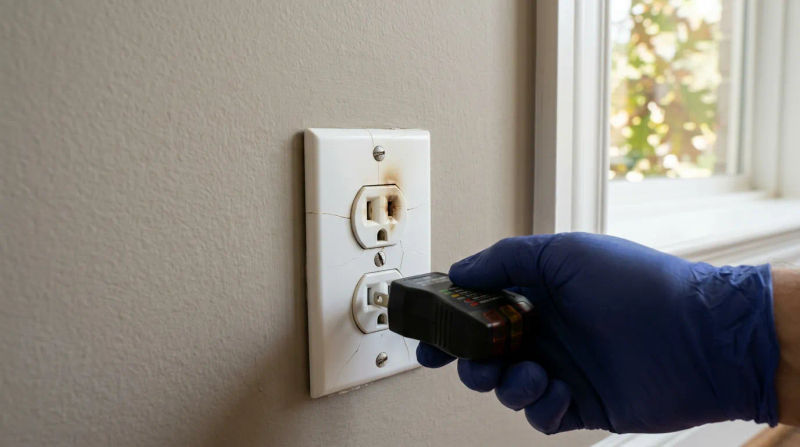
- Discoloration or Scorch Marks: If you see brown, gray, or black marks on the outlet faceplate or the wall around it, it's a clear sign of overheating. This indicates that a dangerous amount of heat has been generated at some point, potentially damaging the internal wiring and creating a fire hazard.
- Outlets are Hot to the Touch: It's normal for a charger block or the plug of a high-draw appliance to feel slightly warm. However, the outlet itself should never feel hot. These hot electrical outlet warning signs suggest the wiring is struggling to handle the electrical load, causing dangerous resistance and heat buildup.
- Frequently Tripping Breakers or GFCIs: A circuit breaker that trips occasionally is doing its job. But if a specific outlet or group of outlets consistently causes a trip, there’s an underlying issue. This is especially true for Ground Fault Circuit Interrupter (GFCI) outlets - the ones with the “TEST” and “RESET” buttons found in kitchens, bathrooms, and garages. If a GFCI outlet keeps tripping what to do is first try resetting it, but if it continues to trip with nothing plugged in, it signals a potential ground fault or a worn-out device.
- Cracked or Broken Faceplates: While a cracked plastic cover might seem like a minor cosmetic issue, it can be a safety risk. A damaged faceplate can expose the wiring terminals, creating a shock hazard. It can also allow dust and debris to enter the electrical box, increasing fire risk.
- Sparks When Plugging In or Out: A tiny, brief blue spark when you first plug something in can be normal. However, if you see larger, brighter yellow or white sparks, or if the outlet sparks every time, it’s a sign of a short circuit or worn, loose contacts within the outlet.
- Plugs Feel Loose or Fall Out: If your cords don't fit snugly into the outlet, the internal metal contacts that grip the prongs are worn out. This poor connection can lead to arcing, heat buildup, and is a significant fire hazard. This is a common issue in older, high-traffic outlets.
What Causes This Problem
Understanding the root cause of an outlet problem helps clarify why professional attention is so crucial. These issues rarely resolve themselves and often stem from a few common culprits.
One of the most frequent outlet buzzing causes West University Place homeowners encounter is simply loose wiring. Over time, vibrations from everyday life or temperature changes can cause terminal screws holding the wires to loosen. When a wire is not secure, electricity can “arc” across the tiny gap, generating intense heat and a buzzing sound.
Another factor is age and wear. Electrical outlets are mechanical devices that don't last forever. The internal springs and contacts can wear out after thousands of plug-in/unplug-out cycles. In many West University Place homes, even those built in the 1990s and 2000s, original outlets in high-use areas may be nearing the end of their safe operational life.
Improper installation is also a significant concern. Whether from a past DIY project or work done by an unqualified handyman, mistakes like back-stabbed wiring (pushing wires into the back of the device instead of securing them under screws) can create weak connections that fail under load. Our crews often find these shortcuts are the source of intermittent problems.
Finally, overloaded circuits can cause outlets to overheat. The large, modern homes in the area often have dedicated circuits for major appliances, but homeowners can inadvertently overload a general-purpose circuit with multiple high-draw devices like space heaters, hair dryers, or vacuums, putting a strain on every component, including the outlet.
When to Call a Professional
While some home maintenance tasks are great for a weekend DIY project, electrical work generally isn't one of them. The risks of shock and fire are simply too high.
You can safely perform a few basic tasks:
- Resetting a tripped circuit breaker or GFCI outlet.
- Testing your GFCI outlets monthly using the “TEST” button to ensure they are functional.
- Carefully replacing a cracked plastic faceplate, but only after shutting off power to that circuit at the breaker panel.
However, you should always call for professional help if you experience:
- Any buzzing, hissing, or popping sounds.
- Scorch marks or discoloration.
- An outlet that is hot to the touch.
- A GFCI or breaker that will not reset or trips immediately after resetting.
An experienced professional will follow a standardized diagnostic process to safely identify the root cause. Our technicians, for example, use specialized tools to test voltage, continuity, and load. They can determine if the problem is a faulty outlet, loose wiring in the wall, or an issue at the circuit breaker panel. This methodical approach ensures the correct repair is made, restoring safety and function to your home's electrical system.
Conclusion
Your home's electrical outlets are critical safety devices, and paying attention to their performance is essential for preventing fires and electrical shock. Signs like buzzing, heat, discoloration, and frequent tripping are not minor annoyances; they are direct warnings of an unsafe condition. Don't wait for a problem to worsen, especially as we head into the holiday season when our homes' electrical demands are at their peak.
If you notice any of these signs, contact a local home improvement contractor for an inspection. A qualified professional can diagnose the issue correctly and ensure your electrical system is safe, reliable, and up to code.