
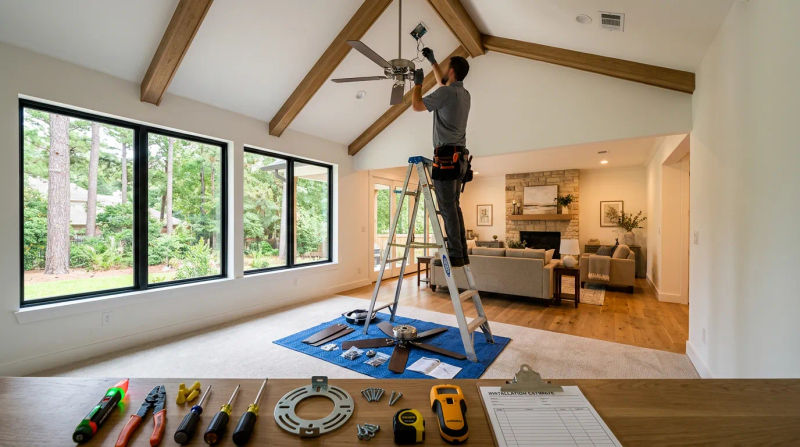
As a Senior Project Manager with over a decade of experience overseeing home improvement projects in the Houston area, I know that cost is one of the first questions on every homeowner's mind. When the late-summer heat lingers into September, adding or upgrading a ceiling fan becomes a top priority for comfort. Especially after a humid spell or the remnants of a hurricane pass through, air circulation is key. My goal here is to provide a transparent look at the ceiling fan installation cost in The Woodlands, so you can budget effectively and make an informed decision for your home.
Here in The Woodlands, many of the beautiful homes built in the 1990s and 2000s feature grand, two-story entryways and living rooms. While visually stunning, these high ceilings are a major factor in installation pricing. We'll break down what to expect.
Average Costs in The Woodlands
The ceiling fan install price The Woodlands homeowners can expect varies based on the existing electrical setup. Our technicians typically encounter three main scenarios. The prices below are for labor and basic installation materials (screws, wire nuts); they do not include the cost of the fan itself.
- Scenario 1: Direct Replacement. This is the most straightforward job. If you have an existing ceiling fan that you want to replace, the wiring and, most importantly, a fan-rated electrical box are already in place. The process involves removing the old unit and installing the new one.
- Estimated Cost: $150 - $300 for a standard-height ceiling (8-9 feet).
- Scenario 2: New Fan, Existing Light Fixture. Many homes have a pre-wired spot for a light fixture in the center of the room. While the wiring is there, the standard electrical box holding a light is not strong enough to support the weight and motion of a ceiling fan. This job requires replacing that box with a proper, fan-rated one.
- Estimated Cost: $250 - $450. This includes the cost to add fan-rated box in The Woodlands, which is a critical safety step.
- Scenario 3: Completely New Installation. If you want a fan where no fixture currently exists, this is the most involved scenario. It requires running new electrical wiring from a power source (like a nearby outlet or switch) through the walls and/or attic to the desired location. A new switch will also need to be installed.
- Estimated Cost: $450 - $850+. The final price heavily depends on the complexity of running the wire. Homes with limited attic access or those two-story great rooms common in The Woodlands will be at the higher end of this range.
Factors That Affect Price
Several variables can shift these estimates. Understanding them will help you anticipate your final project cost.
Ceiling Height This is perhaps the single biggest factor in The Woodlands. A standard 8-foot ceiling allows our crews to work quickly and safely from a standard ladder. However, the 12, 16, or even 20-foot ceilings found in many local homes require much more setup and equipment. This increases labor time significantly.
- High Ceilings (10+ feet): Expect to add $100 - $300+ to the labor cost. This covers the need for extra-tall ladders, potentially light scaffolding, and the additional time for two technicians to work safely. The ceiling fan wiring cost for high ceilings also increases due to the need for longer downrods and more wiring.
Wiring and Electrical Box Status As mentioned, the most critical element is a fan-rated support box. A standard plastic or metal junction box is designed to hold a few pounds. A ceiling fan can weigh 35-50 pounds and generates constant vibration. A fan-rated box is anchored directly to ceiling joists and is engineered to handle this load. Skipping this step is a major safety hazard. If our technicians discover a non-rated box during a replacement, we must install a new one to meet code and ensure your family's safety.
Complexity of New Wiring Runs The architectural style of many 1990s-2000s homes in The Woodlands, with their complex, multi-gabled rooflines, can sometimes make attic access challenging. Running a new wire might involve navigating around multiple trusses and support beams. If the installation is on a first floor with a finished second floor above it, the process may require cutting small, strategic holes in the drywall to fish the wire through, which adds to labor and subsequent repair costs.
Fan Type and Features A basic, lightweight fan with three blades is faster to assemble than a heavy, ornate model with five or more blades, intricate light kits, and decorative housings. Fans with smart features, remote controls, or wall-mounted control panels also require extra steps for pairing and programming, adding slightly to the installation time.
Outdoor Patios Many residents love to add fans to their covered patios for outdoor comfort. These installations require a fan specifically rated as "damp" or "wet" to withstand humidity and moisture. The installation process is similar, but we must ensure all electrical connections are properly sealed against the elements.
How to Get the Best Value
Getting the best value doesn't mean cutting corners, especially with electrical work. It means being efficient with your project planning.
- Bundle Installations: If you're thinking of adding fans to multiple rooms, have them all installed during the same service call. The cost per fan will be lower because our travel and setup time is covered once, allowing our crew to work more efficiently from room to room.
- Prepare the Workspace: You can help reduce labor time by clearing the area directly under the installation spot. Move furniture, lamps, and rugs out of the way so the technicians can set up their ladders and equipment immediately.
- Choose the Right Size Fan: A bigger fan isn't always better. An oversized fan in a small room can create an unpleasant amount of wind. A fan that's too small for a large room won't circulate air effectively. Match the fan's blade span to the room's square footage for optimal performance.
- Hire a Reputable Professional: Attempting electrical work without experience can lead to improper installation, safety risks, or damage to your home's electrical system. A professional ensures the fan is securely mounted, correctly wired, and properly balanced to prevent wobbling and noise. Investing in a quality installation from a company like Bel Air Construction Home Improvement prevents costly future repairs.
Questions to Ask Your Contractor
When you get an estimate, you should feel confident in the person you're hiring. I always encourage homeowners to ask detailed questions. Here are a few I'd recommend:
- Are you and your technicians licensed and insured for electrical work in Texas?
- Does your estimate include all necessary materials, such as a fan-rated box, downrod, and wiring?
- How do you handle installations on high ceilings, and is the cost for that included?
- Is patching and texturing drywall included if you need to cut into it?
- What is your warranty on parts and labor?
- Approximately how long will the installation take to complete?
Clear communication upfront prevents surprises on the final invoice. A professional contractor will be happy to answer these questions and provide a detailed, written estimate.
Installing a new ceiling fan is a fantastic way to improve your home's comfort and energy efficiency, especially during our long, warm seasons. By understanding the factors that influence cost, you can plan your project with confidence.
For a personalized estimate in The Woodlands, contact Bel Air Construction Home Improvement for a free consultation. Our team is ready to help you determine the best and safest solution for your home.