
It’s a familiar scenario for many homeowners: you step into the shower on a cool October morning, expecting a rush of warmth, but instead, you’re met with a blast of icy cold water. As the temperatures begin to drop here in Baytown, our reliance on a functioning water heater becomes more apparent. Before the holiday guests arrive and the demand for hot water peaks, it’s wise to pay attention to the subtle (and not-so-subtle) signals your water heater might be sending. These units rarely fail without warning. Understanding these signs can be the difference between a scheduled, orderly replacement and a frantic, emergency call when the tank finally gives out.
In my 12 years of managing residential projects across the Houston area, I’ve seen firsthand how our local conditions can impact home systems. Baytown’s Gulf Coast humidity and mineral-heavy water create a challenging environment for water heaters, often accelerating corrosion and sediment buildup. This makes being proactive especially important for local homeowners.
Common Signs and Symptoms
Recognizing the early warning signs of a failing water heater is the first step toward preventing a major headache. Our trained technicians are systematic in their diagnostics, and these are the key indicators we look for during an inspection.
- Inconsistent Hot Water or No Hot Water: This is the most obvious symptom. You might find that your hot water runs out much faster than it used to, or you might have no hot water at all. While simple Baytown troubleshooting steps like checking the pilot light on a gas heater or the circuit breaker on an electric one can sometimes solve the issue, fluctuating temperatures often point to a failing heating element or significant sediment buildup.
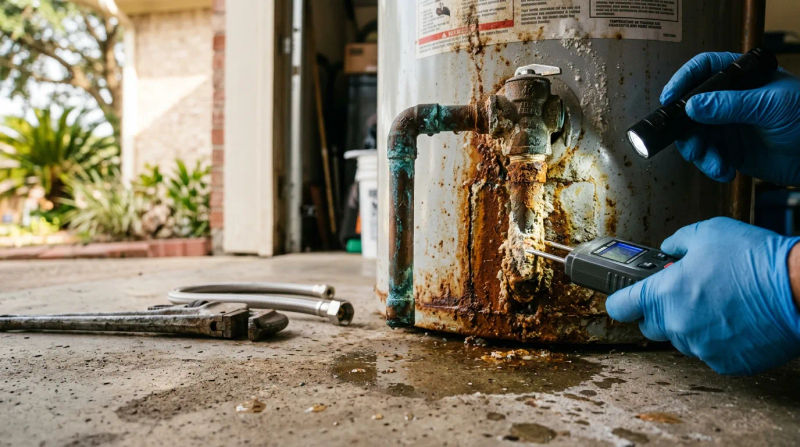
- Discolored or Rusty Water: If you turn on the hot tap and see murky, brown, or rust-tinted water, it’s a major red flag. These are classic Baytown water heater rust signs, indicating that the inside of your tank is corroding. The steel tank is slowly rusting away, and those particles are mixing with your water. Once internal corrosion starts, it cannot be reversed.
- Strange Noises: Your water heater should operate relatively quietly. If you start hearing popping, rumbling, or banging sounds coming from the tank, it's typically caused by sediment. Years of mineral deposits from our local water supply settle at the bottom of the tank, harden, and trap water underneath. As the burner or element heats that trapped water, it boils and creates the popping sounds you hear. This process is not only noisy but also makes the unit work harder, reducing its efficiency and lifespan.
- Leaks and Moisture: Any sign of water around your water heater should be taken seriously. Leaks can come from pressure relief valves, plumbing connections, or the tank itself. The most critical sign is a water heater leaking from bottom Baytown. This almost always signifies a breach in the internal tank, a problem that cannot be repaired. A slow drip can quickly turn into a significant flood, causing extensive water damage to your floors, walls, and belongings.
- Age: The typical lifespan of a conventional tank-style water heater is 8 to 12 years. If you don't know the age of your unit, you can find the manufacturing date on the serial number label. Many homes in Baytown, particularly the classic 1950s ranch-style properties, have likely had several units over the decades. If yours is approaching or has surpassed the 10-year mark and is showing any other symptoms, it’s living on borrowed time.
What Causes This Problem
Understanding the root causes of water heater failure can help you appreciate why professional maintenance and timely replacement are so crucial, especially in our coastal environment.
- Sediment Buildup: As mentioned, Baytown's water is rich in minerals. Over time, these minerals precipitate out of the water and form a thick layer of sediment at the bottom of the tank. This layer acts as an insulator between the heating mechanism and the water, forcing the unit to run longer and hotter to heat the same amount of water. This leads to overheating, component failure, and eventually, tank damage.
- Internal Corrosion: A steel tank filled with water is a natural recipe for rust. To combat this, water heaters are equipped with a component called an “anode rod.” This rod is made of a more reactive metal (like magnesium or aluminum) and is designed to corrode sacrificially, protecting the steel tank. However, this rod gets depleted over time. Once it’s gone, the water begins to attack the tank itself, leading to the Baytown water heater rust signs in your water and eventual tank failure.
- High Water Pressure: Excessive water pressure puts constant stress on your entire plumbing system, including your water heater tank and its connections. This strain can lead to premature leaks and even cause the tank to rupture.
- Component Failure: Like any appliance, individual parts can wear out. On an electric heater, the upper or lower heating elements can burn out. On a gas heater, the thermocouple (a safety device) or the gas control valve can fail. While these parts can often be replaced, on an older unit it may be more cost-effective to consider a full water heater replacement.
When to Call a Professional
Knowing when to tackle a problem yourself versus calling for expert help is key to ensuring your home's safety and avoiding more expensive repairs down the line.
DIY Checks You Can Safely Perform:
- Visual Inspection: Regularly look around the base of your water heater for any signs of moisture or rust stains on the floor.
- Listen for Noises: Pay attention to any new or unusual sounds like popping or rumbling.
- Check the Basics: For no hot water Baytown troubleshooting, you can safely check if a gas heater's pilot light is lit or if an electric heater's corresponding circuit breaker has been tripped.
- Check the Age: Locate the manufacturer's sticker and determine the unit's age. If it's over a decade old, you should be planning for its replacement.
When Professional Help is Essential:
- Any Sign of a Leak: Water damage can be swift and severe. If you discover your water heater leaking from bottom Baytown, turn off the water supply to the unit immediately and contact a professional. This is an emergency that signals imminent failure.
- Rusty Water: If you see rust in your hot water, the tank's integrity is compromised. It’s time for an expert evaluation to confirm if a water heater replacement is needed.
- No Hot Water After Basic Checks: If simple troubleshooting doesn't resolve the issue, the problem likely lies with a failed component like a heating element or thermocouple. These repairs involve working with high voltage or gas lines and should only be handled by qualified technicians.
- Considering a Replacement: A water heater replacement is not a simple DIY project. It involves disconnecting and reconnecting water lines, gas lines, and/or high-voltage electrical circuits. Our crews follow standardized workflows to ensure every installation is done safely, efficiently, and up to local building codes.
Conclusion
Your water heater is an essential part of your home's comfort and daily function, but it won’t last forever. Being observant and understanding the common signs of failure - leaks, rusty water, strange noises, and inconsistent heating - can save you from the stress and expense of an emergency failure. Given Baytown’s humid air and hard water, our systems are under constant strain, making proactive checks even more critical.
Acting early is always the best strategy. Addressing a minor issue or planning a replacement on your own schedule is far better than dealing with a flooded garage or a house full of holiday guests and no hot water. Don't wait for a complete breakdown.
If you notice any of these signs, contact a local home improvement professional for an inspection. They can assess the health of your unit and provide clear options for repair or replacement.